Lost in the Arcade: 5 Forgotten Microcomputers That Almost Changed Everything

The Sinclair ZX81: The Minimalist Pioneer
The Dragon 32: A European Alternative
The Jupiter Ace: A Quirky Forth Machine
The Acorn Atom: The Educational Workhorse
The Tandy TRS-80: The Early Challenger
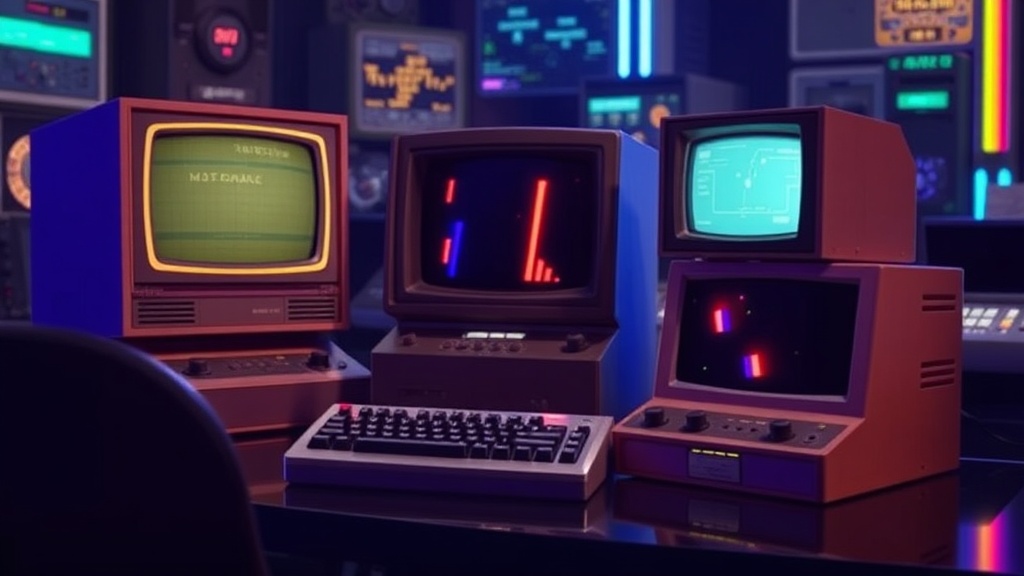
The smell of ozone and warm plastic fills the air as a heavy beige chassis hums on a desk. It’s a specific kind of static—the kind that makes the hair on your arms stand up right before a screen flickers to life. This post looks at five specific microcomputers that arrived with massive hype but ultimately vanished into the footnotes of computing history. We're looking at the machines that had the right ideas at the wrong time, the hardware that almost redefined the home market before being sidelined by better-funded giants.
The 1980s weren't just about the Commodore 64 or the Apple II. There was a chaotic, high-stakes race happening in the background. For every hit, there were dozens of oddities that failed to capture the public's imagination. These machines represent the "what if" scenarios of the retro computing world.
What Was the Sinclair ZX Spectrum?
The Sinclair ZX Spectrum was a highly influential, low-cost 8-bit home computer released by Sinclair Research in the United Kingdom. While it eventually became a staple of British computing, it is often overshadowed in global discussions by its American counterparts. It relied on a rubberized keyboard and a very specific type of color clash that defined its aesthetic.
It wasn't just a computer; it was a cultural phenomenon in certain parts of the world. The hardware was stripped down to the bare essentials to keep the price low. This made it accessible, but it also meant the machine was temperamental. If you've ever tried to type on one of those "dead flesh" rubber keys, you know exactly what I mean. They were mushy, frustrating, and entirely unapologetic.
The ZX Spectrum's legacy lives on in the way it democratized coding. It forced developers to be incredibly clever with limited resources. You can read more about its technical specifications on the official Wikipedia page.
Why it almost changed everything: It proved that a computer didn't need to be a luxury item to be a legitimate tool for creativity. It paved the way for the bedroom coder movement.
Why Did the Dragon 32 Fail?
The Dragon 32 failed primarily because it struggled to find a distinct identity in a market already crowded by the Commodore and Apple ecosystems. It was a machine based on the much more successful TRS-80 Color Computer architecture, but it lacked the momentum to compete. It arrived at a time when consumers were already leaning toward more established brands.
It was a bit of a confused beast. One moment it felt like a serious business machine, and the next, it felt like a toy. This identity crisis is a common thread among many "lost" computers. They couldn't decide if they were for the classroom or the living room. (The classroom usually wins in the long run, anyway.)
The Dragon 32 had a decent library, but it couldn't fight off the sheer volume of software available for the Apple II. It’s a perfect example of how hardware alone isn't enough—you need a massive software ecosystem to survive. If you're interested in how these early machines survived, check out my previous piece on the Golden Age of home computers.
How Much Does a Vectrex Cost Today?
A vintage Vectrex unit typically costs between $300 and $600 depending on its condition and whether it includes the original peripherals. High-end collectors might pay significantly more for a mint-condition unit with a complete box. It's important to note that the price fluctuates wildly based on the health of the internal CRT.
The Vectrex is a unique outlier in the retro world. It isn't a standard home computer in the traditional sense, but it's a programmable microcomputer that uses a vector-based display rather than a standard pixel grid. This gives it a look that no other machine can replicate. It's striking, sharp, and incredibly beautiful to look at in a dark room.
Finding a working Vectrex is a challenge. The screens are delicate, and the hardware is aging. When you're hunting for one, you have to be extremely careful about the power supply. A bad one can fry the internals in a heartbeat.
The Comparison of Niche Microcomputers:
| Machine | Primary Appeal | Main Weakness | Collector Value |
|---|---|---|---|
| Sinclair ZX Spectrum | Affordability/Culture | Keyboard/Color Clash | Moderate |
| Dragon 32 | TRS-80 Compatibility | Lack of Identity | Low |
| Vectrex | Vector Display | Niche Hardware | High |
| Coleco Adam | High Performance | Extreme Unreliability | Moderate |
| Jupiter Ace | Single Language Focus | Extremely Limited | High (Niche) |
What Made the Coleco Adam So Infamous?
The Coleco Adam was infamous for its extreme unreliability and the high failure rate of its components. It was marketed as a complete "all-in-one" system, including a printer and a tape drive, but the complexity of its design was its undo. It was a heavy, cumbersome machine that often failed to boot correctly.
It was an ambitious attempt at a "plug-and-play" experience before that term even existed. Everything was bundled together, which sounds great on a marketing sheet. In reality, it meant that if one part of the system failed, the whole thing was essentially a brick. The printer alone was a massive, heavy beast that required its own dedicated space.
The Coleco Adam is a cautionary tale for collectors. It’s a machine that looks impressive on a shelf but can be a nightmare to maintain. If you're looking to preserve these kinds of machines, you'll need to be diligent about storage. I've written a detailed guide on protecting your collection from environmental damage, which is highly relevant here.
Is the Jupiter Ace Worth Collecting?
The Jupiter Ace is worth collecting for enthusiasts of the Forth programming language, as it is the only significant microcomputer built around that specific language. It's a highly specialized piece of hardware that appeals to a very small, very dedicated group of programmers. For most, it's a curiosity rather than a daily driver.
The machine is incredibly compact. It's almost toy-like in its scale. But don't let the size fool you—it was a serious attempt to create a computer that prioritized a specific way of thinking. It's a piece of computing history that represents a very specific philosophy of software-driven hardware.
It’s a niche item. You won't find much documentation or support for it today, which makes it a challenge. But that's also what makes it interesting. It’s a ghost in the machine, a relic of a time when developers were trying to build computers around languages rather than the other way around.
Collecting these machines isn't just about owning old plastic. It's about understanding the different paths technology could have taken. Each of these five machines represents a fork in the road. Some led to the giants we know today, and some led to a dead end. That dead end is where the most interesting stories are usually found.