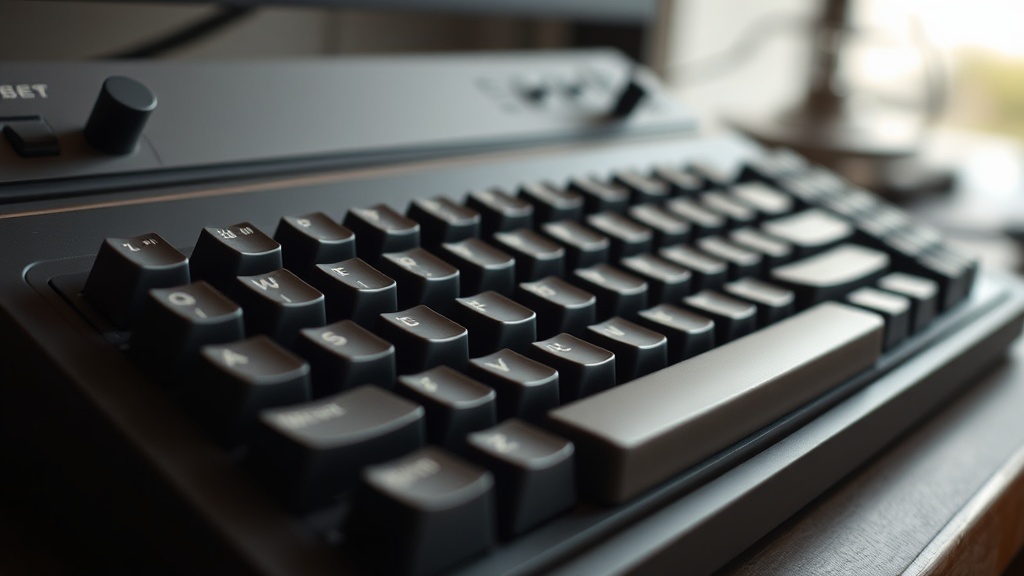
Finding Quality Vintage Keyboard Keycaps and Replacement Keys

A single, missing "Enter" key on an IBM Model M keyboard isn't just a nuisance; it's a visual scar on a piece of computing history. When you're restoring a vintage setup, the tactile experience is everything. This guide covers the practicalities of sourcing, identifying, and installing replacement keycaps for vintage mechanical and membrane keyboards. We'll look at material types, sizing-specific issues, and where to actually find the good stuff without getting scammed by modern low-quality reproductions.
Finding the right parts can feel like a scavenger hunt. You might find a perfectly functional keyboard that looks terrible because the legends are faded or the plastic is "shiny" from decades of use. Fixing this is a fundamental part of the hobby.
What are the different types of vintage keycaps?
Keycaps are generally categorized by their material—ABS or PBT—and their printing method, such as dye-sublimation or double-shot molding. Most vintage keyboards from the 80s and 90s used ABS (Acrylonitrile Butadiene Styrene) plastic, which is known for developing a "shine" over time as the texture wears down. While ABS provides that crisp, sharp legend look, it's prone to the dreaded texture loss.
PBT (Polybutylene Terephthalate) is the tougher, more matte sibling. You see this a lot in modern high-end mechanical keyboards, but finding true vintage PBT sets is much harder. If you're working on a high-end terminal or a specialized piece of hardware, you might even encounter specialized materials like even more durable, heavy-duty plastics used in industrial settings.
Here is a quick breakdown of common vintage styles:
| Type | Material | Common Characteristics |
|---|---|---|
| ABS | Acrylonitrile Butadiene Styrene | Crisp legends, prone to "shine," lighter weight. |
| PBT | Polybutylene Terephthalate | Matte finish, heavy, highly resistant to wear. |
| Double-Shot | Varies | The legend is a separate piece of plastic molded in. |
| Dye-Sub | Usually PBT/ABS | Ink is heat-infused into the plastic surface. |
If you are working on a serious restoration, you might need to look into keycap technical specifications to ensure the legend style matches your existing set. A mismatched "A" key can ruin the aesthetic of a perfect vintage build.
Where can I find replacement keys for old keyboards?
The best places to find authentic vintage keycaps are enthusiast marketplaces, specialized keyboard vendors, and local estate sales.
eBay is the obvious first stop. It's a goldmine for specific-model parts, like a single "Escape" key for a specific IBM Model M. However, be careful. Many sellers list "keycaps" that are actually modern, cheap reproductions meant to look old. If the price seems too good to be true, it's probably a modern injection-molded piece with no historical accuracy.
For more specialized or high-end-looking replacements, check out enthusiast-driven sites like Drop or specialized vendors on Reddit. If you're looking for a full set to replace a worn-out board, you might need to look for "New Old Stock" (NOS). This refers to parts that were manufactured decades ago but never actually used. These are the holy grail for collectors.
A few tips for searching:
- Search by specific model numbers (e.g., "Apple Extended Keyboard II keycaps").
- Use terms like "NOS" or "New Old Stock."
- Look for "donor boards"—sometimes buying a broken, cheap keyboard of the same model is cheaper than buying single keys.
Sometimes, you'll need to buy a whole "donor" keyboard just to harvest the parts. It's a common tactic in the community. If you have a keyboard with a broken PCB but perfect keycaps, that's a win for your collection.
How do I know if keycaps are compatible with my keyboard?
Compatibility depends entirely on the switch type (mechanical vs. membrane) and the stem profile (the part that connects to the switch). If you have a mechanical keyboard, you need to know if it uses Cherry MX style stems, or perhaps something older and more obscure like Alps or topre switches. A Cherry MX keycap will not fit an Alps switch—it's physically impossible.
This is where many beginners stumble. You might find a beautiful set of keycaps online, but they won't actually fit your hardware. It's a frustrating way to spend money. Always check the "stem" or "mount" type before you hit the buy button.
Here is a list of common vintage mounting types you'll encounter:
- Cherry MX: The most common modern standard; uses a cross-shaped (+) stem.
- Alps: Very common in the 80s (think high-end IBM or Apple boards); has a much different, more complex mounting mechanism.
- IBM Model M: These are specific to the heavy-duty buckling spring keyboards and are not easily swappable with standard mechanical sets.
- Membrane: These often don't have "keycaps" in the traditional sense, but rather a plastic shell that sits over a rubber dome.
If you're deep into hardware restoration, you might already be reviving dead hardware with recapped power supplies, and you'll find that the precision required for electronics extends to the tactile parts too. A mismatch in stem type is a dead end.
Don't forget to check the "profile" of the keycaps. Profiles like SA, OEM, or DSA refer to the height and shape of the keys. A set might have the right stems but the wrong height, making your keyboard look like a jagged mountain range instead of a smooth surface. This is especially noticeable on vintage boards where the "sculpted" feel of the rows is part of the original design.
It's also worth noting that many vintage keyboards used non-standard spacing. For example, the "Spacebar" on a vintage terminal might be significantly longer or shorter than a modern standard. If you buy a modern "104-key" set, you'll likely find it's missing the correct length for your vintage board. It's a headache, but a necessary one to manage.
When you're looking at photos of the items for sale, look closely at the legends. If they look too perfect, or if the plastic has a certain "plastic-y" sheen that looks too uniform, you're likely looking at a modern reproduction. Real vintage-era ABS plastic has a certain character—sometimes a slight yellowing from UV exposure—that is very hard to fake convincingly.
If you're just starting out, don't overcomplicate it. Start by identifying your switch type. Once you know if you're dealing with Cherry, Alps, or a simple membrane, your search becomes much more manageable. It's a small detail, but it's the difference between a successful restoration and a pile of useless plastic.